

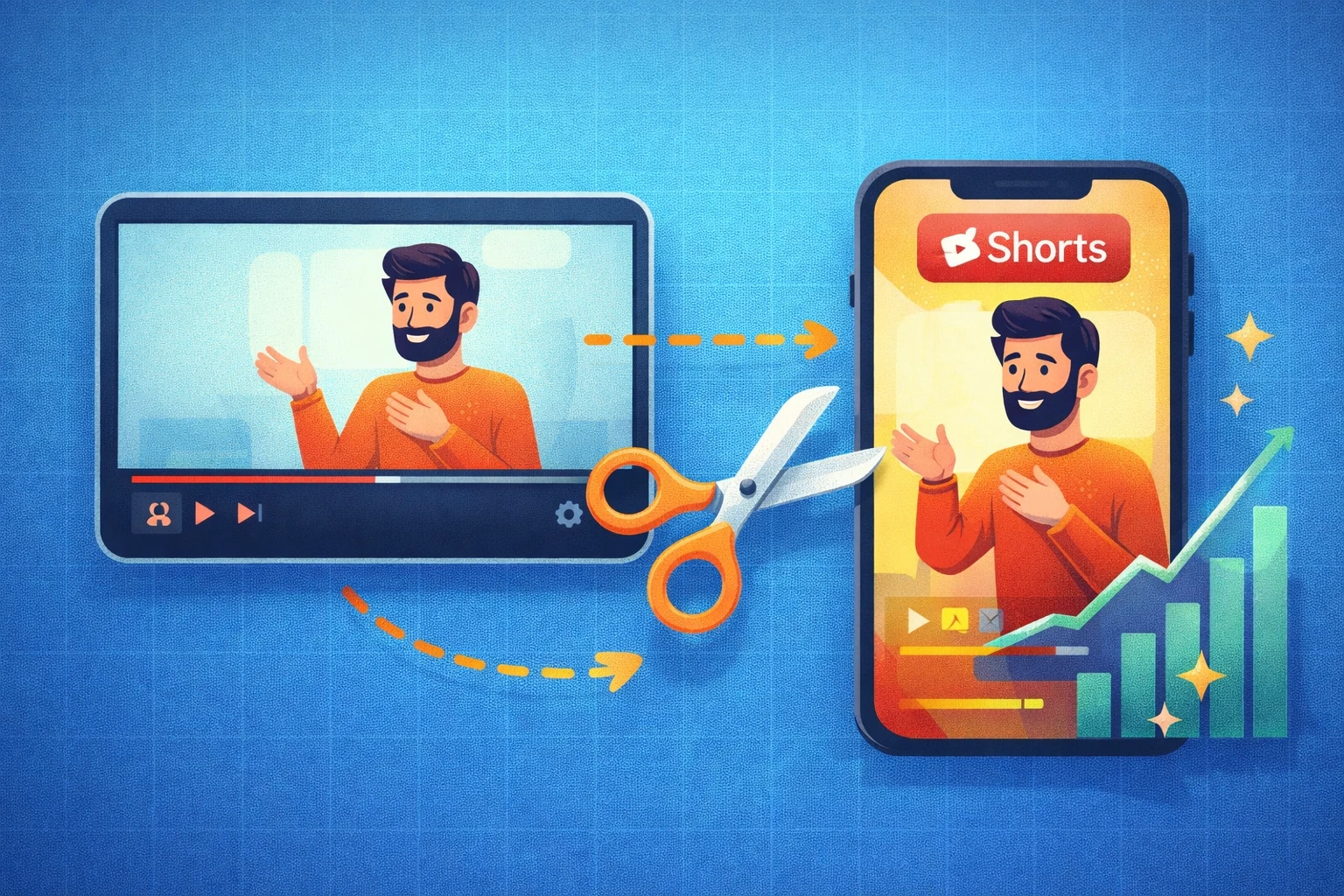
Turn Long Videos Into YouTube Shorts (Step-by-Step Repurposing Guide)
If you want to turn long videos into YouTube Shorts efficiently, you need more than basic trimming. Repurposing long-form content into vertical Shorts is one of the most powerful growth strategies available today — but only when structure, pacing, and retention mechanics are adapted properly.
Many creators try to turn long videos into YouTube Shorts by cutting random 30–60 second segments. This rarely works. Shorts operate in a swipe-driven environment where attention must be earned immediately. A repurposed clip must feel intentionally designed for Shorts, not extracted from a larger video.
This guide explains how to turn long videos into YouTube Shorts in a scalable and repeatable way. You’ll learn clip selection psychology, vertical reframing, caption strategy, retention engineering, batching workflows, and how automation tools can speed up the process without lowering quality.
How to Turn Long Videos Into YouTube Shorts the Right Way
When you turn long videos into YouTube Shorts properly, the goal is not compression — it’s transformation. Long-form videos build context gradually. Shorts must deliver value instantly.
Here is the structural difference:
- Long-form: setup → development → expansion → conclusion
- Shorts: hook → value → payoff
If your repurposed clip still relies on the original setup, viewers will swipe away before the value lands.
Step 1: Select the Right Segments
The most important part of learning how to turn long videos into YouTube Shorts is selecting the right moments. Not every section of a 10-minute video is Short-worthy.
Look for segments that:
- Contain one clear takeaway
- Trigger emotion (surprise, disagreement, relief)
- Deliver a concise explanation
- Include a strong claim or statement
Segments that require 20 seconds of context before becoming interesting usually underperform as Shorts.
Step 2: Rewrite the Opening Hook
Even if the original segment starts mid-sentence, you can still turn long videos into YouTube Shorts effectively by adding a new hook. This hook reframes the clip for instant clarity.
Strong hook examples:
- “Most creators get this wrong…”
- “This is why your Shorts don’t grow…”
- “Stop doing this if you want more reach…”
The hook must communicate the value before the viewer commits time.
Step 3: Compress Long-Form Pacing
Long-form pacing is usually too slow for Shorts. To turn long videos into YouTube Shorts successfully, you must remove:
- Pauses and filler words
- Repeated explanations
- Side comments
- Unnecessary transitions
Shorts reward density. Every second must move the viewer forward.
Step 4: Convert to Vertical Format Properly
When you turn long videos into YouTube Shorts, format adaptation is critical. Simply cropping 16:9 footage to 9:16 often cuts off key visual elements.
According to Hootsuite’s Shorts overview, vertical optimization significantly impacts mobile engagement behavior. Hootsuite guide to YouTube Shorts
Ensure faces, demos, and text remain centered in the vertical frame. If necessary, zoom in dynamically to maintain focus.
Step 5: Add Captions for Retention
Captions are not optional. When you turn long videos into YouTube Shorts, assume many viewers are watching on mute.
Best practices:
- Short caption chunks (3–7 words)
- Highlight key phrases
- Fast timing synced with speech
Dynamic captions increase perceived pacing and reduce drop-off.
Retention Engineering for Repurposed Shorts
Retention is the deciding factor when you turn long videos into YouTube Shorts. Without retention, reach collapses.
Retention tactics include:
- Visual shifts every 2–4 seconds
- Clear narrative thread
- Strong final payoff
- No unresolved tangents
If you want deeper context on optimal length decisions, see our guide on best video length for YouTube Shorts.
Batching Workflow for Scale
To scale effectively, batch the process of turning long videos into YouTube Shorts instead of finishing one clip at a time.
- Select 10–20 segments in one session
- Write hooks for all clips
- Convert to vertical format in one editing block
- Add captions in batches
This reduces cognitive switching and improves consistency.
Automation: When to Use AI Tools
If you turn long videos into YouTube Shorts frequently, automation becomes valuable. AI platforms can accelerate vertical conversion, caption generation, and batch exporting.
For a tool-focused breakdown, see our InVideo AI for YouTube Shorts review.
For a broader perspective on repurposing workflows, Descript explains structured content repurposing pipelines. Descript: repurpose video content
Decision
Decision: If you already create long-form content, learning how to turn long videos into YouTube Shorts properly is one of the most efficient ways to multiply distribution. The key is restructuring for Shorts behavior — not just trimming footage.
When done strategically, one long video becomes multiple high-retention Shorts that expand reach, test hooks, and compound growth.