

Lead Generation Chatbot Use Cases
Lead generation chatbots are most effective when they are used in clearly defined scenarios. While many businesses experiment with chatbots broadly, real results usually come from applying them to specific use cases where conversation adds measurable value over static forms.
This article explores practical lead generation chatbot use cases, explains why they work, and highlights situations where chatbots outperform traditional lead capture methods. For a broader understanding of how chatbots fit into websites overall, you can start here: AI chatbot for website.
Table of Contents
What makes a good lead generation use case?
Not every page or interaction benefits from a chatbot. Strong lead generation chatbot use cases share a few common characteristics.
- The visitor has a clear but undeclared intent
- Multiple pieces of information are needed
- Some level of qualification improves lead value
- Immediate human response is not required
When these conditions are present, conversational flows reduce friction and guide users more effectively than static forms.
Lead generation chatbot use cases
The following lead generation chatbot use cases consistently deliver strong results across different industries.
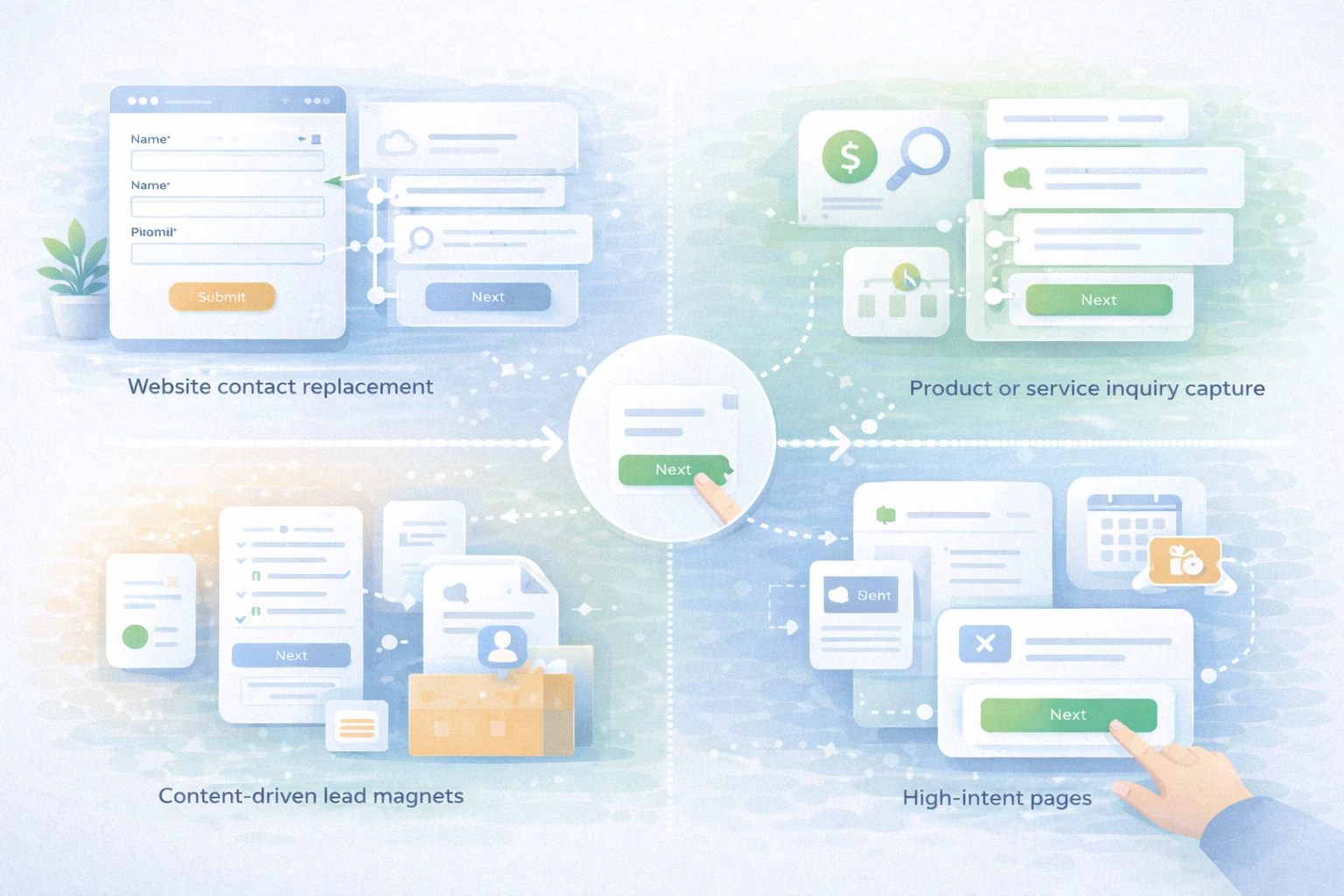
Website contact replacement
Replacing a traditional contact form is one of the most common chatbot use cases. Instead of presenting multiple fields at once, the chatbot asks for information step by step.
This approach lowers perceived effort and often increases completion rates, especially on mobile devices.
Product or service inquiry capture
When visitors are exploring offerings but are not yet ready to buy, a chatbot can capture interest by asking a few qualifying questions before requesting contact details.
This use case works well for B2B services, agencies, and SaaS products with multiple plans or customization options.
Content-driven lead magnets
Chatbots can gate valuable content such as ebooks, templates, or reports. Instead of a simple download form, a short conversation improves engagement and perceived value.
By asking one or two context questions, the chatbot can also personalize follow-up communication.
Lead qualification scenarios
One of the strongest lead generation chatbot use cases is early-stage qualification.
Chatbots can ask questions about company size, budget range, timeline, or specific needs before collecting contact details. This filters out low-intent leads and improves sales efficiency.
Unlike forms, chatbots can adapt questions dynamically, skipping irrelevant steps based on earlier answers.
Platforms designed for conversational lead capture—such as Collect.chat for lead generation—are often optimized for this qualification-first approach.
High-intent website pages
Some pages naturally attract visitors with stronger intent. These are ideal locations for lead generation chatbots.
- Pricing pages
- Service detail pages
- Case studies
- Comparison or “vs” pages
On these pages, chatbots can capture leads at the moment of peak interest, answering last-minute questions and guiding users toward conversion.
Marketing campaigns and promotions
Lead generation chatbot use cases extend beyond static website pages.
For time-limited campaigns, chatbots provide a flexible way to collect leads without redesigning forms or landing pages. Questions can be updated quickly to match campaign goals.
This agility is particularly valuable for event registrations, webinar signups, and promotional offers.
Conversion-focused marketing discussions around interactive lead capture are often explored in CRO communities such as CXL’s lead generation resources.
Use cases where chatbots perform poorly
Not all situations benefit from chatbots, and recognizing weak use cases is just as important.
- Very short, single-field signups
- Highly sensitive data collection
- Scenarios requiring immediate human interaction
In these cases, traditional forms or direct contact options may still outperform conversational interfaces.
Decision: where should you deploy a lead chatbot?
Decision: Lead generation chatbots perform best when they reduce friction, qualify intent, and guide users through multi-step data collection. The strongest use cases appear on high-intent pages, campaigns, and scenarios where lead quality matters more than raw volume.
If you are evaluating conversational tools built specifically for these scenarios, you can review one option here: Collect.chat for lead generation.