

Chatbot for Lead Generation
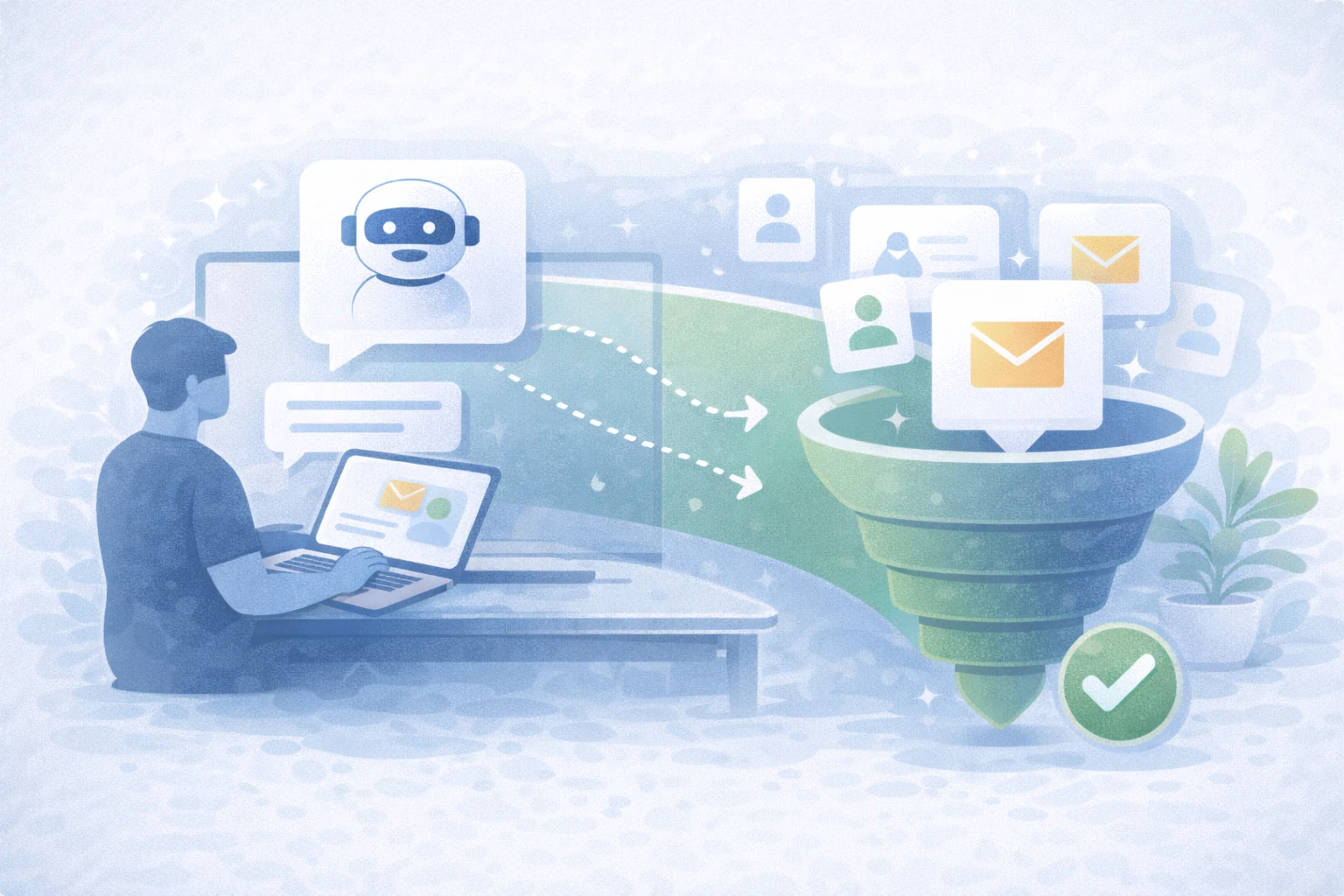
A chatbot for lead generation shifts the focus from static data collection to real-time interaction. Instead of asking visitors to fill out long forms, a chatbot can guide them through a short conversation that feels more natural and less demanding.
This article explains how a chatbot for lead generation works in practice, when it outperforms traditional forms, and where its limitations are. For a broader view of how chatbots are used across websites, you can start here: AI chatbot for website.
Table of Contents
What is a lead generation chatbot?
A lead generation chatbot is designed to collect contact details or qualification information through a conversational flow. Instead of presenting multiple fields at once, the chatbot asks questions step by step and adapts based on user responses.
This approach borrows heavily from conversational UX principles commonly discussed in conversion-focused design communities, such as form optimization and progressive disclosure techniques described in UX research resources like Nielsen Norman Group’s form design studies.
Why use a chatbot for lead generation?
The main reason businesses adopt a chatbot for lead generation is friction reduction. Long or complex forms often cause users to abandon the process before completion.
A chatbot lowers this barrier by asking only one question at a time. This makes the process feel lighter and easier, especially on mobile devices.
Chatbot for lead generation in real scenarios
A chatbot for lead generation works best when the goal is clear and the conversation is short.
Landing page lead capture
On landing pages, chatbots can replace or complement forms by engaging visitors immediately. Instead of scrolling past a form, users are prompted to interact.
Lead qualification
Chatbots can ask qualifying questions before collecting contact details. This helps filter out low-intent leads and improves overall lead quality.
Event or demo sign-ups
For webinars, demos, or consultations, chatbots can gather key details while keeping the interaction short and focused.
Tools designed specifically for conversational lead capture—such as Collect.chat for lead generation—are often optimized for these scenarios.
How chatbots differ from traditional forms
Compared to static forms, a chatbot for lead generation changes how users experience data entry.
- Forms: show all fields at once, which can feel overwhelming.
- Chatbots: reveal questions progressively, reducing cognitive load.
- Interaction: chatbots feel more conversational and less transactional.
However, chatbots are not always superior. For simple, low-friction forms, traditional layouts may still convert well.
Lead quality vs lead quantity
A chatbot for lead generation often improves lead quality by encouraging users to engage before submitting details.
That said, chatbots may reduce total submission volume if users drop out mid-conversation. Whether this is a drawback or an advantage depends on business goals.
For teams focused on sales efficiency rather than raw numbers, fewer but better-qualified leads can be a positive outcome.
Limitations of lead generation chatbots
Despite their benefits, chatbots are not a universal solution.
- They can feel intrusive if triggered too aggressively
- They rely on clear conversation design
- Some users still prefer traditional forms
Understanding these limits helps prevent overuse and protects user experience.
Decision: should you use a chatbot for leads?
Decision: A chatbot for lead generation makes sense when you want to reduce form friction, qualify leads, and create a more engaging first interaction. It works best on landing pages and focused campaigns, but should complement—not blindly replace—traditional forms.
If you are evaluating tools built specifically for conversational lead capture, you can review one example here: Collect.chat for lead generation.