

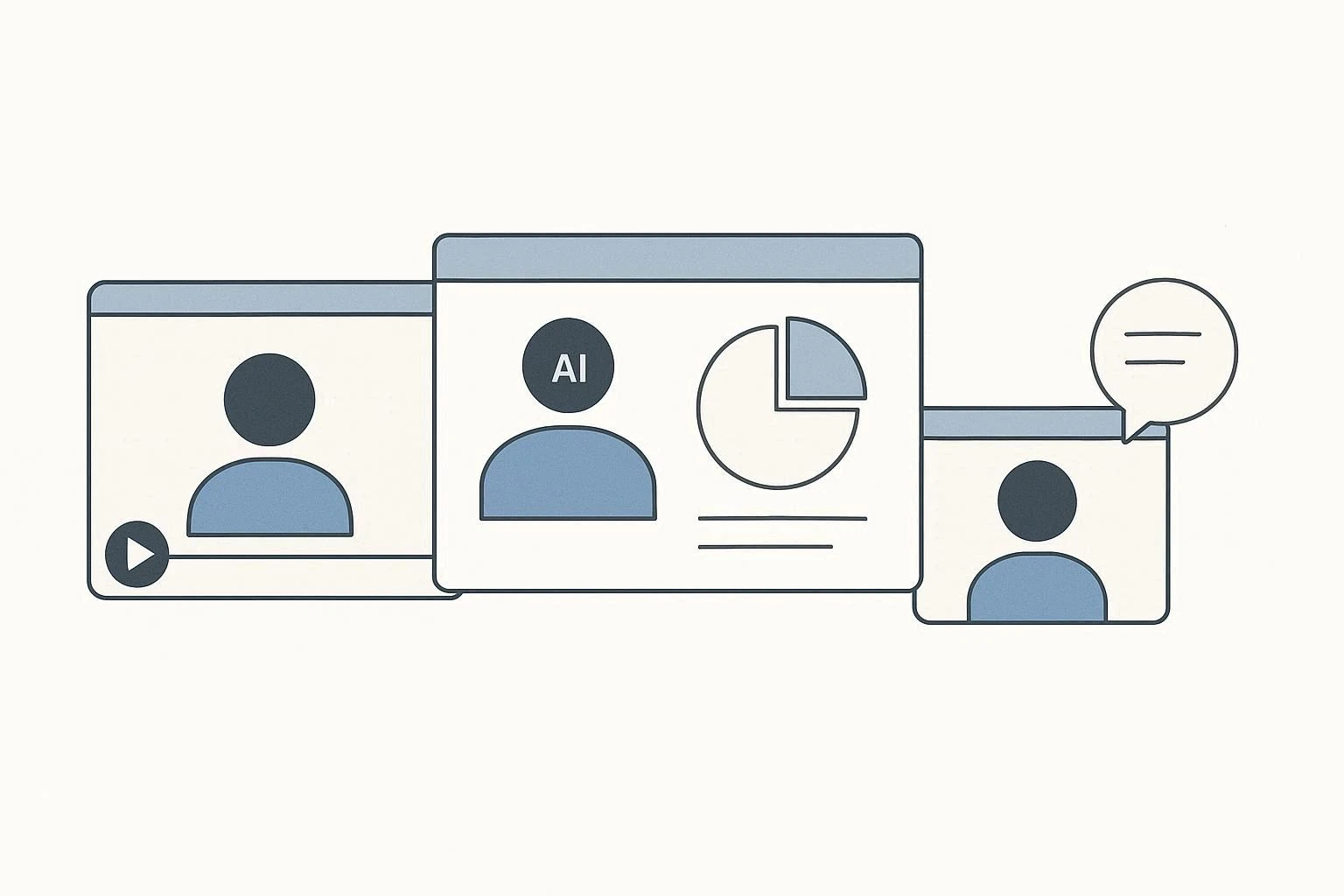
When AI avatar videos actually make sense
AI avatar videos are often presented as a universal replacement for traditional video production. In reality, they are neither a gimmick nor a one-size-fits-all solution. The key question most teams should ask is not whether AI avatar videos are good or bad, but when AI avatar videos actually make sense.
This support article focuses on realistic, business-oriented scenarios where AI avatar videos deliver real value. It also highlights situations where using them creates more problems than benefits.
Table of Contents
- Why this question matters
- When AI avatar videos actually make sense
- Internal training and onboarding
- Product and process explanations
- Multilingual and frequently updated content
- Where AI avatar videos don’t make sense
- Comparison mention: AI avatars vs traditional video
- Decision: how to decide for your use case
Why this question matters
Many teams adopt AI avatar videos because they are fast and scalable, without clearly defining what problem they are solving. This often leads to disappointment. The technology is blamed, even though the mismatch comes from unrealistic expectations.
Understanding when AI avatar videos actually make sense helps teams avoid wasted effort. It clarifies where automation improves communication and where human presence still matters.
When AI avatar videos actually make sense
AI avatar videos perform best in scenarios that share three characteristics: the message is structured, the delivery is repeatable, and emotional nuance is not the primary goal. When these conditions are met, AI avatars become a practical communication tool rather than a novelty.
Below are the most reliable situations where AI avatar videos actually make sense in real organizations.
Internal training and onboarding
Internal training is one of the strongest use cases for AI avatar videos. Onboarding materials, compliance training, and process explanations rarely require emotional storytelling. They require clarity, consistency, and easy updates.
AI avatar videos make sense here because content often changes. Updating a policy or workflow does not require reshooting video with a human presenter. A script update is enough.
For distributed teams, this also ensures that every employee receives the same information, delivered in the same way.
Product and process explanations
Explaining how something works is another scenario where AI avatar videos actually make sense. This includes software walkthroughs, internal tools, and standardized customer-facing explanations.
In these cases, the avatar is not the focus. The focus is the information. Screen recordings, diagrams, and step-by-step visuals carry most of the value, while the avatar provides narration and structure.
This aligns well with established explainer video principles, where clarity and pacing matter more than personality. For reference, explainer formats are commonly used in instructional and educational videos for exactly this reason.
Multilingual and frequently updated content
Localization is one of the clearest answers to when AI avatar videos actually make sense. Translating and re-recording human videos is expensive and slow. AI avatars can generate consistent versions in multiple languages with minimal effort.
This is especially useful for global teams, SaaS companies, and organizations with international customers. The same script can be adapted for different regions without changing visuals or presenters.
Similarly, content that requires frequent updates benefits from AI avatars. Product changes, feature announcements, or internal updates can be published faster and kept current.
Where AI avatar videos don’t make sense
Just as important as knowing when AI avatar videos actually make sense is knowing when they do not. AI avatars struggle in scenarios that rely heavily on emotional connection, persuasion, or spontaneity.
- Brand storytelling and emotional marketing campaigns
- Founder messages and leadership communication
- Sales videos requiring trust and personal connection
- Content built around personality or charisma
In these cases, viewers expect human presence. Replacing it with an avatar often reduces credibility instead of improving efficiency.
Comparison mention: AI avatars vs traditional video
Compared to traditional video production, AI avatar videos trade emotional depth for speed and scalability. Traditional video requires more effort but delivers stronger human connection. AI avatars reduce production friction but introduce perceptual limitations.
This comparison shows that the two formats are not competitors. They serve different communication goals.
Decision: how to decide for your use case
Decision: AI avatar videos actually make sense when your goal is clear, repeatable information delivery at scale. If clarity, consistency, and speed matter more than emotional impact, AI avatars are a strong option.
Platforms like Synthesia are designed specifically for these scenarios, offering fast production and easy updates for business-focused content. A detailed breakdown of its strengths and limitations is available here: Synthesia AI avatar video generator review.
If you treat AI avatar videos as a communication tool rather than a marketing shortcut, they can deliver real, measurable value.
If you’re deciding whether AI avatar videos are the right approach for your channel, this overview breaks down the full faceless YouTube strategy and where Synthesia fits. Faceless YouTube channel strategy.